
Course : Authority and Leadership from Thucydides to Adam Smith
LEPE1 - Despina Vertzagia, Georgios Steiris, Spiros Tegos
-
Display all units
-
I. Introduction: Authority, Power, and Political Leadership
-
II. Thucydides and Xenophon: Political Leadership, Power, and the Art of Ruling
-
III. Plato and Cicero: Political Knowledge, Virtue, and Auctoritas
-
IV. The Machiavellian leader 1
-
V. The Machiavellian leader 2
-
VI. The Machiavellian leader 3
-
VII. Thomas Hobbes: Authorization, Sovereignty, and Political Obligation
-
VIII. Authority of the assembly and democracy in the work of John Adams
-
IX. Authority of the institutions of the Old Regime and the authority of the new republican institutions during the French Revolution
-
X. Authority, power, and the common interest in political systems according to David Hume
-
XI. Authority, power, and the common interest in political systems according to Adam Smith
-
XII.
-
I. Introduction: Authority, Power, and Political Leadership
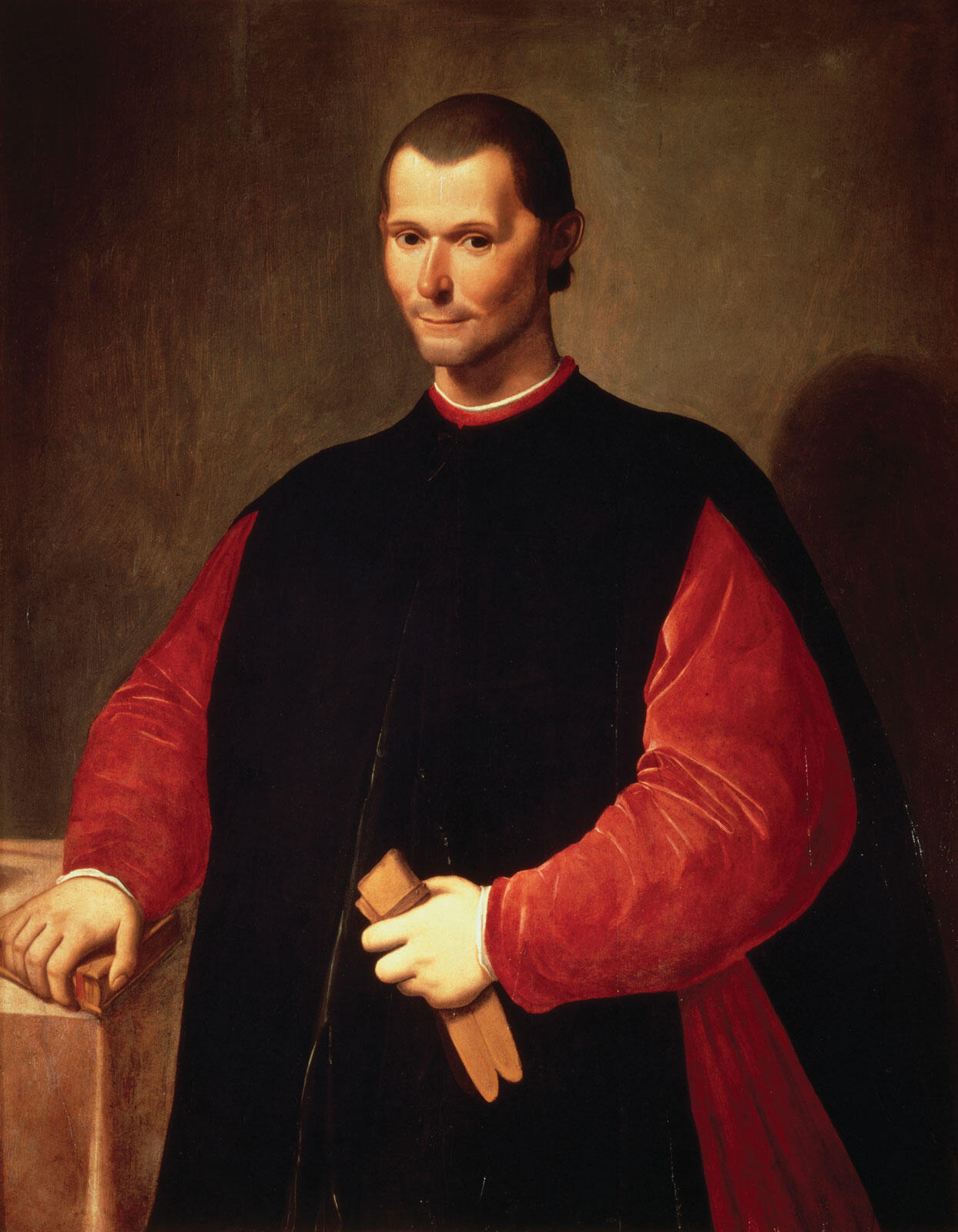
IV. The Machiavellian leader 1
Unit overview
Presentation and critical analysis of the characteristics of a leader according to Machiavelli’s Il Principe.
Keywords
virtù; caso; fortuna
Required readings
- N. Machiavelli, The Prince: https://www.earlymoderntexts.com/assets/pdfs/machiavelli1532.pdf
Complementary readings
-
Dietz, Mary G. “Trapping The Prince: Machiavelli and the Politics of Deception.” The American Political Science Review 80, no. 3 (1986): 777–799. https://doi.org/10.2307/1960538.