
Course : Authority and Leadership from Thucydides to Adam Smith
LEPE1 - Despina Vertzagia, Georgios Steiris, Spiros Tegos
-
Display all units
-
I. Introduction: Authority, Power, and Political Leadership
-
II. Thucydides and Xenophon: Political Leadership, Power, and the Art of Ruling
-
III. Plato and Cicero: Political Knowledge, Virtue, and Auctoritas
-
IV. The Machiavellian leader 1
-
V. The Machiavellian leader 2
-
VI. The Machiavellian leader 3
-
VII. Thomas Hobbes: Authorization, Sovereignty, and Political Obligation
-
VIII. Authority of the assembly and democracy in the work of John Adams
-
IX. Authority of the institutions of the Old Regime and the authority of the new republican institutions during the French Revolution
-
X. Authority, power, and the common interest in political systems according to David Hume
-
XI. Authority, power, and the common interest in political systems according to Adam Smith
-
XII.
-
I. Introduction: Authority, Power, and Political Leadership
II. Thucydides and Xenophon: Political Leadership, Power, and the Art of Ruling
Unit overview
This unit examines the nature and challenges of political leadership through the writings of Thucydides and Xenophon, focusing on the relationship between political judgment, power, justice, persuasion, and obedience.
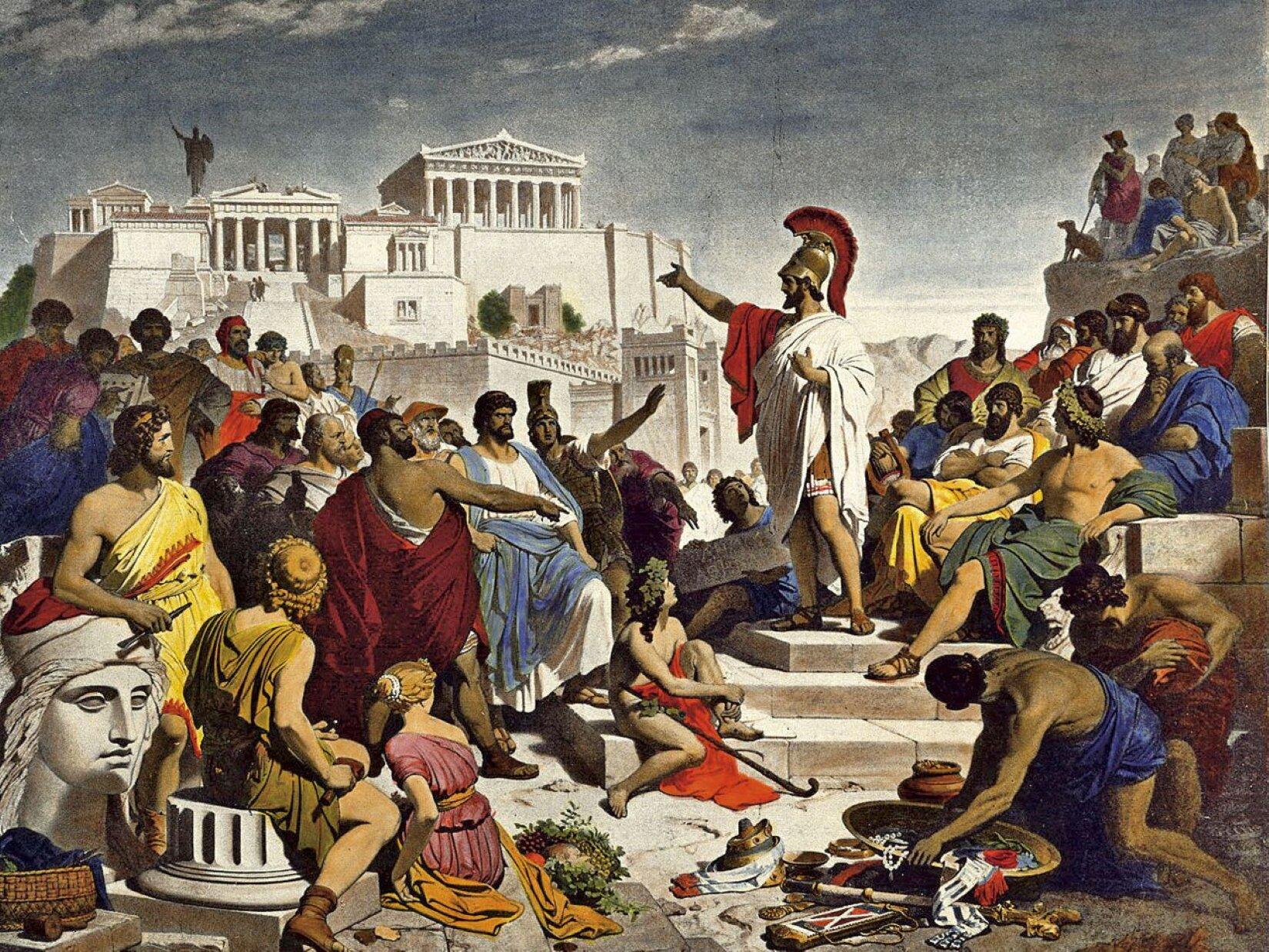
In Thucydides' History of the Peloponnesian War, the contrasting figures of Pericles and Alcibiades provide an opportunity to investigate the relationship between individual leadership and democratic institutions. Particular attention is devoted to Pericles' capacity to guide public opinion, the importance of political foresight and practical judgment, and the dangers associated with personal ambition and the pursuit of political power.
The discussion also examines the Melian Dialogue, in which the confrontation between Athens and Melos raises fundamental questions about the relationship between power and justice, the limits of political persuasion, and the role of coercion in political relations. The Athenians' arguments concerning necessity, interest, and the unequal distribution of power provide a framework for investigating whether political authority can be reduced to superior force and whether considerations of justice retain their significance under conditions of extreme inequality.
The unit further considers the relationship between political speeches, political action, and the historian's understanding of political life. Students will have the opportunity to examine the tensions between political necessity, justice, and the claims of the political community.
The discussion subsequently turns to Xenophon's treatment of leadership as a practical art requiring knowledge, self-mastery, experience, and the ability to secure the willing cooperation of others. Through the Cyropaedia, Hiero, and Memorabilia, students examine the education of rulers, the relationship between leadership and voluntary obedience, and the distinction between kingship and tyranny.
By comparing Thucydides and Xenophon, the unit investigates whether successful political leadership depends primarily upon superior judgment, personal virtue, institutional authority, or the ability to inspire trust and obedience. It also considers the tension between leadership grounded in persuasion and political domination sustained by coercive power.
Keywords
political leadership; political judgment; Pericles; Alcibiades; Melian Dialogue; power and justice; political necessity; political realism; coercion; persuasion; voluntary obedience; Cyrus; kingship; tyranny; self-mastery
Required readings
-
Thucydides. History of the Peloponnesian War, 2.35–65 (Pericles and political leadership).
-
Thucydides. History of the Peloponnesian War, 5.84–116 (The Melian Dialogue).
-
Thucydides. History of the Peloponnesian War, 6.15–18 (Alcibiades and political ambition).
-
Xenophon. Cyropaedia, 1.1, 1.6, and 8.1.
-
Xenophon. Hiero, 1–11.
-
Xenophon. Memorabilia, 3.1–5.
Complementary readings
-
Strauss, Leo. The City and Man. University of Chicago Press, 1964. Chapter III, "On Thucydides' War of the Peloponnesians and the Athenians."
-
Gray, Vivienne J. Xenophon's Mirror of Princes: Reading the Reflections. Oxford University Press, 2011.
-
Ober, Josiah. Political Dissent in Democratic Athens: Intellectual Critics of Popular Rule. Princeton University Press, 1998.