
Course : Authority and Leadership from Thucydides to Adam Smith
LEPE1 - Despina Vertzagia, Georgios Steiris, Spiros Tegos
-
Display all units
-
I. Introduction: Authority, Power, and Political Leadership
-
II. Thucydides and Xenophon: Political Leadership, Power, and the Art of Ruling
-
III. Plato and Cicero: Political Knowledge, Virtue, and Auctoritas
-
IV. The Machiavellian leader 1
-
V. The Machiavellian leader 2
-
VI. The Machiavellian leader 3
-
VII. Thomas Hobbes: Authorization, Sovereignty, and Political Obligation
-
VIII. Authority of the assembly and democracy in the work of John Adams
-
IX. Authority of the institutions of the Old Regime and the authority of the new republican institutions during the French Revolution
-
X. Authority, power, and the common interest in political systems according to David Hume
-
XI. Authority, power, and the common interest in political systems according to Adam Smith
-
XII.
-
I. Introduction: Authority, Power, and Political Leadership
I. Introduction: Authority, Power, and Political Leadership
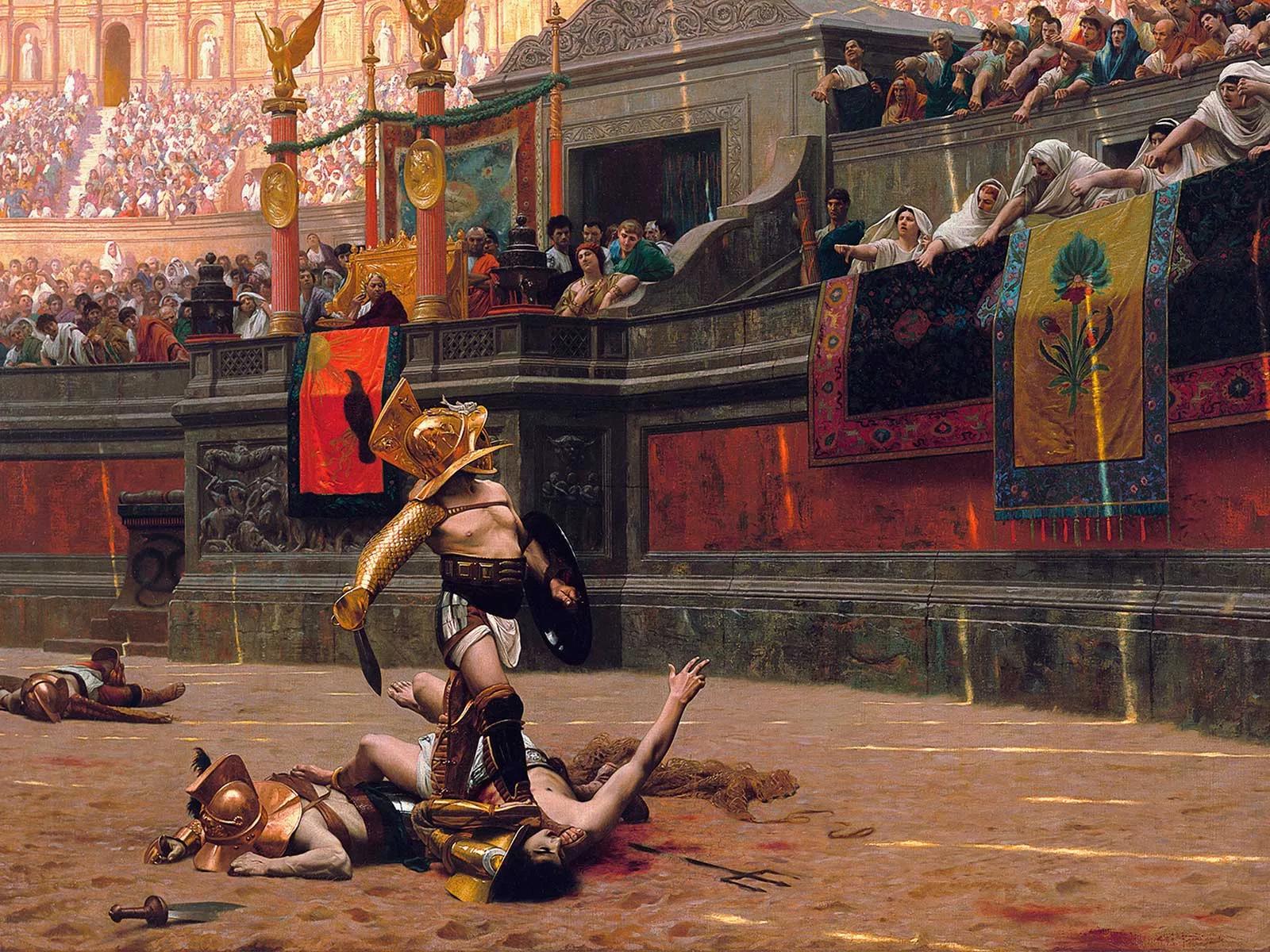
Unit overview
This introductory unit examines the conceptual foundations of political authority and leadership, focusing on the distinction between authority, power, coercion, persuasion, and domination. It addresses the fundamental question of what makes political authority legitimate and investigates the different grounds upon which individuals and institutions claim the right to rule and expect obedience.
Drawing upon Hannah Arendt's analysis of authority and Max Weber's typology of legitimate domination, the unit explores the relationship between political power, legitimacy, and the recognition of authority. Particular attention is devoted to the distinction between the formal possession of political power and the capacity to secure obedience without continuous reliance on coercion.
The discussion also introduces the Roman concepts of auctoritas, potestas, and imperium, highlighting the historical and conceptual differences between recognized political standing, legally constituted power, and the authority to command.
The unit further draws upon Leo Strauss's understanding of classical political philosophy, examining the relationship between political opinion, philosophical knowledge, and the question of the best political order. Strauss's account of the distinction between classical and modern political philosophy provides an interpretative framework for considering the transformation of political authority from antiquity to Hobbes.
A further dimension of the discussion concerns the relationship between political authority and the person who exercises it. Drawing upon Ernst H. Kantorowicz's The King's Two Bodies, the unit introduces the distinction between the ruler's natural body and political body, examining how political authority may acquire an institutional existence that transcends the physical life of an individual ruler. This distinction provides an opportunity to reflect upon the relationship between political office, personal authority, and institutional continuity.
By bringing these different approaches into dialogue, the unit establishes the central questions that will guide the subsequent examination of ancient and modern political thinkers: What distinguishes political leadership from domination? What qualities justify the exercise of political authority? And what is the relationship between political power and the common good?
Keywords
authority; power; political leadership; legitimacy; domination; coercion; persuasion; political obligation; obedience; sovereignty; auctoritas; potestas; imperium; political knowledge
Required readings
-
Arendt, Hannah. "What Is Authority?" In Between Past and Future: Eight Exercises in Political Thought. 91-141. Viking Press, 1961
-
Weber, Max. "The Three Types of Legitimate Rule." Translated by Hans Gerth. Berkeley Publications in Society and Institutions 4, no. 1 (1958): 1-11.
Complementary readings
-
Kantorowicz, Ernst H. The King's Two Bodies: A Study in Mediaeval Political Theology. Princeton, NJ: Princeton University Press, 1957.
- Strauss, Leo. "What Is Political Philosophy?" In What Is Political Philosophy? And Other Studies. University of Chicago Press, 1988.