
Course : Authority and Institutional Discourse
LEPC3 - Charalambos Tsekeris, Nikos Erinakis, Spiros Tegos, Despina Vertzagia, Ayelet Shavit
-
Display all units
-
I. What is authority (philosophy - epistemology)
-
II. What is institutional discourse (philosophical genealogy of institutional discourses)
-
III. Leadership versus authority
-
IV. Leadership and institutional discourses (ethical participation, rhetoric, philosophy of conflicts)
-
V. Authority in conflict with institutional discourses
-
VI. Leadership without authority
-
VII. Esoteric Writing and Institutional Discourse: Philosophy, Persecution, and the Limits of Public Speech
-
VIII. Liberalism and Institutional Discourse: Religious Toleration, Freedom of Conscience, and Political Authority
-
IX. Sovereignty and Institutional Discourse: Carl Schmitt on Political Authority, Decision, and the State of Exception
-
X. Formation of authority
-
XI. Authority and political theology
-
XII. Authority and authoritarianism
-
XIII. Authority and law
-
XIV. Authority, Institutional Discourse, and Interculturality
-
I. What is authority (philosophy - epistemology)
IX. Sovereignty and Institutional Discourse: Carl Schmitt on Political Authority, Decision, and the State of Exception
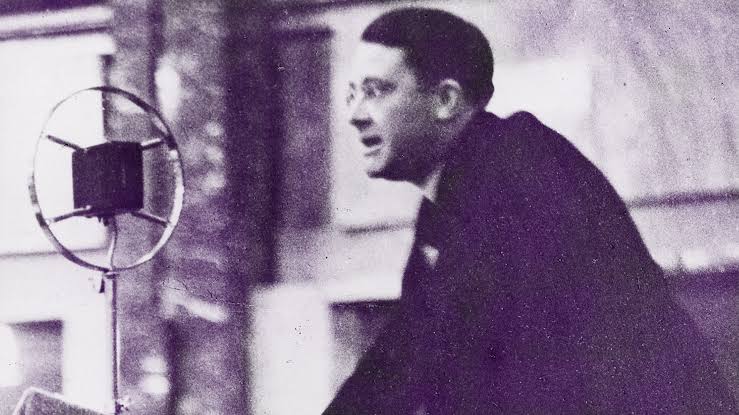
Unit overview
This unit examines the relationship between sovereignty, political authority, and institutional discourse through the political and legal philosophy of Carl Schmitt. Particular attention is devoted to the tension between legal norms and political decisions, exploring whether institutional authority can be fully grounded in established legal procedures or whether the existence and preservation of political order ultimately depend upon a sovereign decision.
Drawing primarily on Schmitt's Political Theology, the unit investigates the concept of sovereignty in relation to the state of exception, focusing on the circumstances under which the ordinary legal framework may be suspended. It considers Schmitt's distinction between norm and decision and examines the implications of his decisionist account of sovereignty for understanding the foundations, legitimacy, and limitations of institutional authority.
The discussion further explores Schmitt's critique of liberal parliamentarism and his distinction between legality and legitimacy. Particular emphasis is placed on the relationship between institutional discourse, political representation, and the authority of constitutional institutions. The unit investigates whether parliamentary deliberation and legal procedures can provide an adequate foundation for political order or whether, as Schmitt argues, the political necessarily involves decisions that cannot be reduced to rational discussion or procedural norms.The unit also introduces Schmitt's concept of the political, particularly the friend–enemy distinction, in order to examine the limits of institutional neutrality and the relationship between political conflict and institutional identity. These considerations provide a basis for assessing the extent to which institutional discourse can accommodate fundamental political disagreements without presupposing a prior conception of political unity.
Finally, the unit situates Schmitt's arguments within the constitutional crises of the Weimar Republic and critically considers the relationship between his political theory, authoritarianism, and the historical consequences of his opposition to liberal constitutionalism. Ultimately, the unit approaches sovereignty not merely as a legal concept but as a fundamental philosophical problem concerning the relationship between political decision, institutional legitimacy, and the conditions under which legal and political authority can be established, maintained, or suspended.
Keywords
Carl Schmitt; institutional discourse; sovereignty; political authority; political decision; decisionism; state of exception; political theology; legality; legitimacy; constitutional order; liberal parliamentarism; political representation; friend–enemy distinction
Required readings
-
Schmitt, Carl. The Concept of the Political. Expanded edition. Translated by George Schwab. University of Chicago Press, 2007.
Complementary readings
-
Schmitt, Carl. Political Theology: Four Chapters on the Concept of Sovereignty. Translated by George Schwab. University of Chicago Press, 2005. Chapters 1–3.